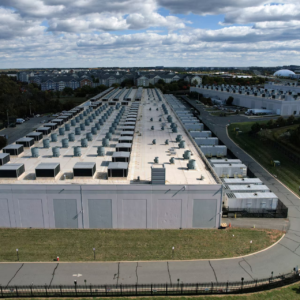


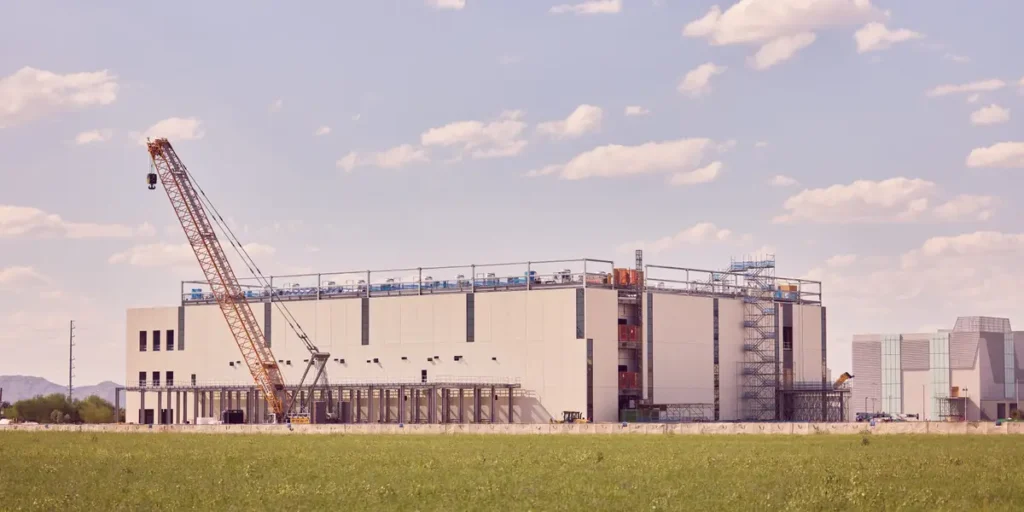
The industrial real estate landscape is undergoing a quiet revolution. Across North America and Europe, aging factories, warehouses, and manufacturing plants sit underutilized—their owners watching property taxes accumulate while struggling to find modern tenants. Meanwhile, data center developers are scouring these same markets with acquisition teams armed with seven-figure budgets, hunting for specific industrial characteristics that most property owners don’t realize they possess.
This disconnect represents a massive opportunity for unlocking trapped capital in industrial buildings. Properties that seemed obsolete for traditional manufacturing are becoming prime candidates for digital infrastructure conversion, often commanding premium valuations when the right bones exist beneath decades of operational grime.
The question isn’t whether industrial-to-data-center conversions will continue—it’s which properties will capture this demand and which owners will recognize the opportunity before competitors do.
The Perfect Storm Driving Industrial Conversions
Three converging forces have created unprecedented demand for industrial building conversions. First, purpose-built data center development faces 18-36 month timelines from site acquisition to operational status. Converted industrial facilities can cut this timeline by 40-60%, a critical advantage when hyperscalers and enterprise clients need capacity yesterday.
Second, traditional data center markets like Northern Virginia and Phoenix have exhausted their power grid capacity. Utilities in these regions are declining new service requests or quoting 5-7 year wait times for substation upgrades. Industrial buildings in secondary markets often sit on electrical infrastructure originally designed for heavy manufacturing—precisely what data centers require.
Third, the economics have fundamentally shifted. Five years ago, conversion costs exceeded ground-up construction by 15-20%. Today, supply chain stabilization and modular retrofit approaches have narrowed this gap to 5-10%, while the speed-to-market advantage justifies any premium.
Key Characteristics Data Center Developers Seek
Not every industrial building qualifies for conversion. Developers apply rigorous screening criteria that eliminate 90% of properties within the first site visit.
Power Infrastructure Requirements
The electrical service represents the single most critical factor. Developers target facilities with existing transformers rated at 5+ megawatts, though 10MW+ properties command significant premiums. The building’s historical power consumption matters less than the utility’s capacity to deliver additional load. A facility that previously drew 2MW but sits on infrastructure capable of 12MW represents ideal inventory.
Proximity to substations—ideally within 1,000 feet—dramatically reduces interconnection costs. Properties requiring new transmission lines or substation construction rarely pencil out, regardless of other attributes.
Structural and Spatial Considerations
Floor load capacity tells developers whether expensive structural reinforcement will be necessary. Modern data center equipment requires 250-350 pounds per square foot. Industrial buildings designed for heavy machinery, metal fabrication, or automotive assembly typically exceed these thresholds. Warehouse and distribution facilities often fall short, requiring costly slab reinforcement.
Clear ceiling heights of 20+ feet provide adequate space for overhead cable trays, HVAC distribution, and future flexibility. Buildings with 14-16 foot clearances can work but limit design options and increase mechanical costs.
Column spacing and floor plate configuration matter more than total square footage. What industrial buildings are data center developers buying? Developers prefer open floor plans with columns on 40-50 foot centers, allowing efficient white space layout without structural obstacles interrupting hot aisle/cold aisle configurations.
Location and Connectivity Factors
Fiber availability has become non-negotiable. Properties within 500 feet of existing fiber routes—whether dark fiber or lit services—dramatically outperform isolated facilities. Developers research fiber maps before touring buildings, eliminating sites requiring costly fiber extensions exceeding $150,000.
Zoning and permitting environments vary wildly by jurisdiction. Industrial buildings in municipalities with established data center ordinances move through approvals 60-80% faster than those requiring conditional use permits or zoning variances. Smart property owners research local precedents before marketing to developers.
Property Types Commanding Premium Interest
Certain industrial building categories consistently attract multiple offers, often triggering competitive bidding that exceeds asking prices by 20-30%.
Former Manufacturing Facilities
Automotive plants, steel mills, and heavy equipment factories top developer wish lists. These facilities were engineered for massive electrical loads, reinforced for heavy equipment, and built with robust HVAC systems. A closed automotive stamping plant in the Midwest recently sold for $47 million—triple its assessed value—because the electrical infrastructure and structural specifications aligned perfectly with hyperscale requirements.
Paper mills and printing facilities offer similar advantages, particularly those with on-site electrical generation or co-generation capabilities. The ability to produce some portion of required power on-site provides both cost advantages and grid resilience.
Cold Storage and Food Processing Plants
Refrigerated warehouses possess characteristics that translate surprisingly well to data center operations. The electrical infrastructure designed for industrial refrigeration systems often scales to data center loads. Insulated building envelopes reduce cooling costs. Existing backup generators and redundant power systems minimize retrofit requirements.
A 200,000-square-foot cold storage facility in Ohio converted to a 15MW data center for 40% less than comparable ground-up construction, operational within 11 months of acquisition.
The Conversion Economics Owners Need to Understand
Property owners contemplating sales to data center developers should understand valuation methodologies differ fundamentally from traditional industrial real estate metrics.
Standard industrial valuations rely on comparable sales per square foot or capitalization rates applied to rental income. Data center developers underwrite properties based on total power capacity, conversion costs per kilowatt, and time-to-revenue. A 100,000-square-foot building with exceptional power infrastructure may command higher valuations than a 300,000-square-foot facility with limited electrical capacity.
Can my old factory become a data center? Owners should commission electrical and structural assessments before engaging buyers. Properties marketed with engineering reports documenting power capacity, transformer specifications, and floor load ratings receive 25-40% more initial inquiries and close 30% faster than those requiring buyers to conduct basic due diligence.
Regional Hotspots for Industrial Conversions
Geographic patterns have emerged as developers target specific markets combining available industrial inventory with favorable power costs and connectivity.
The Midwest—particularly Ohio, Indiana, and Michigan—leads conversion activity. Abundant manufacturing legacy, low power costs (averaging 6-8 cents per kWh), and fiber infrastructure built during the automotive industry’s peak create ideal conditions. Columbus, Ohio alone has seen seven significant industrial-to-data-center conversions since 2021.
The Southeast continues attracting investment, though competition has intensified. Georgia, North Carolina, and South Carolina offer tax incentives specifically targeting data center development, enhancing conversion economics. Available industrial inventory has tightened as word spreads, pushing developers into secondary markets like Greenville and Winston-Salem.
Preparing Your Property for Maximum Value
Owners serious about capturing data center conversion premiums should take specific preparatory steps months before listing properties.
Obtain utility letters confirming available power capacity and estimated timelines for service upgrades. These documents cost nothing but demonstrate proactive diligence that buyers value. Properties marketed with utility confirmation letters receive offers 40% faster.
Conduct Phase I environmental assessments even if not immediately required. Data center developers maintain strict environmental standards, and clean Phase I reports eliminate a common deal-killing discovery during due diligence.
Document historical power consumption through utility records. High historical usage validates infrastructure capacity and demonstrates the building’s electrical systems functioned reliably under load.
Frequently Asked Questions
What makes an industrial building suitable for data center conversion?
The primary factors include existing electrical capacity of 5+ megawatts, structural floor loads exceeding 250 pounds per square foot, clear ceiling heights above 20 feet, and proximity to fiber infrastructure within 500 feet. Buildings meeting these criteria typically qualify for preliminary evaluation.
How long does industrial-to-data-center conversion typically take?
Conversion timelines range from 8-18 months depending on scope, compared to 24-36 months for ground-up construction. Properties requiring minimal structural work and possessing adequate electrical infrastructure trend toward the shorter end. Facilities needing significant mechanical, electrical, and structural upgrades approach the longer timeline.
Do data center developers pay premium prices for industrial properties?
Yes, when properties possess the right characteristics. Industrial buildings with robust power infrastructure and favorable structural specifications routinely sell for 150-300% of comparable industrial property values. The premium reflects the value of speed-to-market and existing infrastructure that would cost millions to replicate.
Which geographic markets see the most conversion activity?
The Midwest leads with Ohio, Indiana, and Michigan accounting for 35% of conversions nationally. The Southeast follows with Georgia and the Carolinas. These regions combine available industrial inventory, low power costs, and favorable regulatory environments.
Can warehouse buildings work for data center conversions?
Warehouses face more challenges than heavy manufacturing facilities. Most lack adequate power infrastructure and require structural reinforcement to meet floor load requirements. Conversion costs for warehouses typically run 30-50% higher than purpose-built industrial facilities, though exceptions exist for warehouses serving power-intensive operations.
What documentation should owners prepare before approaching developers?
Critical documents include utility service letters confirming power capacity, structural engineering reports documenting floor loads and ceiling heights, Phase I environmental assessments, fiber availability maps, and historical utility consumption records. Properties marketed with complete documentation packages receive 40% more qualified inquiries.
Conclusion
The intersection of digital infrastructure demand and industrial real estate obsolescence has created a unique window for unlocking trapped capital in industrial buildings. Properties that struggled to attract traditional manufacturing tenants are commanding premium valuations from data center developers who recognize the embedded value in electrical systems, structural specifications, and strategic locations.
This opportunity won’t remain indefinitely. As conversion activity accelerates and more owners recognize these buildings’ potential, competition will intensify and premiums will compress. The industrial properties changing hands today at multiples of assessed value represent the leading edge of a broader transformation in how markets value aging infrastructure. Owners who understand what developers seek—and prepare their properties accordingly—will capture disproportionate value in this evolving landscape.