


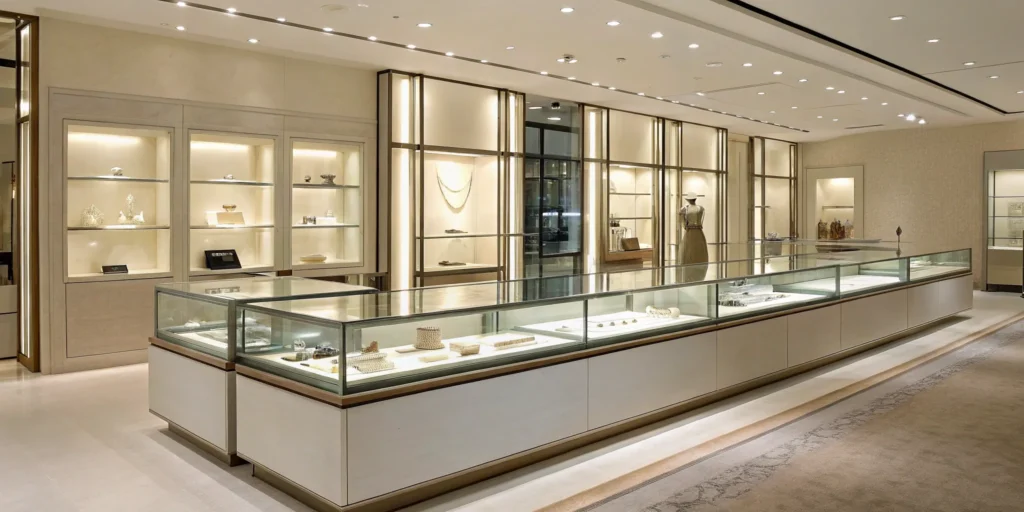
The choice between glass display cases and open shelving is one of the most fundamental decisions in retail design. It goes beyond aesthetics, directly influencing customer interaction, product security, and perceived value. A poorly chosen fixture can hinder sales, while the right one can elevate your merchandise and enhance the shopping experience.
This decision requires a strategic balance. You must weigh the need for accessibility against the necessity of protection, and consider how each option frames your brand story. The debate between glass display cases vs open shelving isn’t about which is universally better, but about which is the superior tool for your specific products and retail goals.
We’ll analyze the core advantages, limitations, and ideal applications for both glass-enclosed displays and open racks. By examining factors like product type, store environment, and customer behavior, you can make an informed choice that protects your investment and maximizes your sales potential.
The Strategic Advantages of Glass Display Cases
Glass display cases create a defined, protected environment for merchandise. They function as both a physical barrier and a psychological frame, signaling that the items inside are valuable, delicate, or exclusive. This presentation method is less about restriction and more about curation.
Enhanced Security and Product Protection
The primary, undeniable benefit of a glass case is physical protection. It secures items against theft, a critical consideration for high-value goods like jewelry, electronics, or luxury accessories. It also provides a shield from environmental factors: dust, accidental spills, and the natural oils from frequent handling can degrade products over time. For collectibles, fine art, or delicate fabrics, this preservation is non-negotiable.
Elevating Perceived Value and Curation
Glass inherently adds a layer of prestige. Placing an item behind glass subtly communicates that it is worth protecting and worthy of special attention. This allows for dramatic, museum-style lighting within the case, highlighting textures and details without the glare of overhead store lights. The enclosed space forces a more deliberate viewing experience, encouraging customers to pause and appreciate, which can justify a higher price point. Effective Retail Displays in this category often use layered lighting and minimalist staging to focus all attention on the product.
Managing Customer Interaction
For products that require assistance or explanation, glass cases naturally facilitate staff interaction. A customer must engage with an employee to access the product, creating a perfect opportunity for personalized service, upselling, and sharing product knowledge. This controlled access is ideal for complex items where expert guidance is part of the sales process.
The Functional Benefits of Open Racks and Shelving
Open shelving embodies accessibility and efficiency. It encourages browsing, tactile engagement, and high-volume merchandise turnover. This fixture style supports a fast-paced shopping environment where convenience and discoverability are key.
Encouraging Browsing and Impulse Purchases
Open racks remove barriers between the customer and the product. This direct access invites touching, trying, and comparing—actions that are crucial for categories like apparel, books, or home goods. The ease of access speeds up the decision-making process and fosters impulse buys. When customers can freely handle items, they are more likely to make a spontaneous purchase.
Maximizing Space and Volume Displays
Open systems are typically more space-efficient and cost-effective than enclosed cases. They allow you to display a larger quantity of merchandise in a given footprint, which is essential for retailers focusing on volume, variety, or fast-moving consumer goods. They also simplify restocking and inventory management, as staff can quickly replenish shelves without unlocking doors or rearranging intricate displays.
Creating a Casual, Accessible Atmosphere
The open layout promotes a relaxed, self-service shopping experience. It aligns with brands that want to feel approachable, democratic, or trendy. For stores selling everyday items, seasonal goods, or products meant to be touched and felt, this atmosphere can be more welcoming than a more formal, enclosed display strategy.
Key Decision Factors: Matching Fixtures to Your Products
Choosing the right fixture requires a clear-eyed assessment of your merchandise, clientele, and operational model. Use these criteria to guide your selection.
Product Value and Fragility
- Glass Cases: Best for high-value, high-theft-risk items (jewelry, watches, smartphones), fragile goods (ceramics, crystal), and items degraded by dust or handling (high-end collectibles, certain fabrics).
- Open Racks: Suitable for lower-unit-cost items, durable goods, and products where tactile evaluation is standard (clothing, produce, hardware, paperback books).
Desired Customer Experience
- Glass Cases: Cultivates an exclusive, curated, and service-oriented experience. It slows down the shopping journey for considered purchases.
- Open Racks: Promotes a fast, independent, and exploratory experience. It empowers the customer to browse at their own pace without intervention.
Store Layout and Traffic Flow
- Glass Cases: Often serve as anchor points or focal areas. They require adequate surrounding space for customers to gather and view without blocking aisles.
- Open Racks: Excellent for guiding traffic, creating product zones, and maximizing floor space. The right configuration of Store Fixtures like gondolas and gridwall can make a store feel full and navigable.
Budget and Maintenance Considerations
- Glass Cases: Higher initial investment. Require regular cleaning of glass surfaces and interior lighting maintenance. Theft is minimized, but insurance costs for high-value items remain a factor.
- Open Racks: Lower upfront cost. Easier and faster to clean around, but merchandise is more susceptible to dust, damage, and disorganization from customer handling, requiring constant facing and tidying.
Hybrid Approaches: Blending Both Worlds
Most successful retail environments aren’t exclusively one or the other. A hybrid approach allows you to segment your merchandise strategically within the same space.
A common model is to use glass display cases for a store’s signature, high-margin, or premier items near the checkout or entrance. Meanwhile, open shelving and racks are used for the broader inventory, accessories, or promotional items. For example, a boutique might display its designer handbags and fine jewelry in illuminated cases, while scarves, belts, and ready-to-wear items are presented on open racks and tables.
This method creates visual hierarchy. The glass cases draw the eye and establish brand prestige, while the open areas facilitate browsing and add energy. It also allows you to tailor the shopping experience to different customer intents, serving both the deliberate buyer and the casual browser effectively.
Frequently Asked Questions
Can open racks be used for high-end products?
Yes, but context is everything. In a luxury boutique, open displays can project confidence and accessibility, suggesting the product is meant to be touched and experienced. However, this requires a controlled environment with high staff-to-customer ratios to mitigate security risks and maintain pristine presentation. It’s less common for small, easily pocketed luxury items.
Are glass display cases bad for sales because they limit touch?
Not necessarily. For the right product, the limitation can increase desirability. The “glass barrier” can create a sense of aspiration and exclusivity. The key is to compensate by ensuring impeccable visual presentation and trained staff who can promptly offer to remove items for closer inspection, turning a barrier into an engagement opportunity.
How do I secure items on open racks?
Security for open shelving relies on a combination of strategies: strategic store layout with clear sightlines, electronic article surveillance (EAS) tags, locked pegs for high-theft items, and attentive staff training. The goal is to deter opportunism without making the shopping experience feel oppressive.
Which option is better for a small retail space?
Both can work, but efficiency is paramount. Slim-profile glass display cases can create a feeling of quality without consuming much floor space. Well-organized, vertical open shelving maximizes wall space. Often, a single statement glass case for key items, combined with wall-mounted open shelves, is an effective solution for small stores.
Do glass cases require special lighting?
Integrated lighting is a major advantage. LED strip lights installed inside the case provide ideal, glare-free illumination that makes colors pop and details shine. This is far more effective than relying on ambient store lighting, which can create reflections on the glass surface.
Conclusion
The choice between glass display cases and open racks is a strategic decision with tangible effects on sales, security, and brand perception. Glass cases excel at protecting valuable inventory, elevating perceived worth, and facilitating high-touch service. Open racks champion accessibility, encourage volume sales, and foster a dynamic shopping atmosphere.
Your decision should stem from a clear understanding of your product’s inherent needs and the customer journey you intend to create. There is no one-size-fits-all answer, and many retailers find the most powerful approach lies in a intentional blend of both. By carefully aligning your fixtures with your merchandise and market position, you transform simple shelving into a silent, yet highly effective, sales tool.